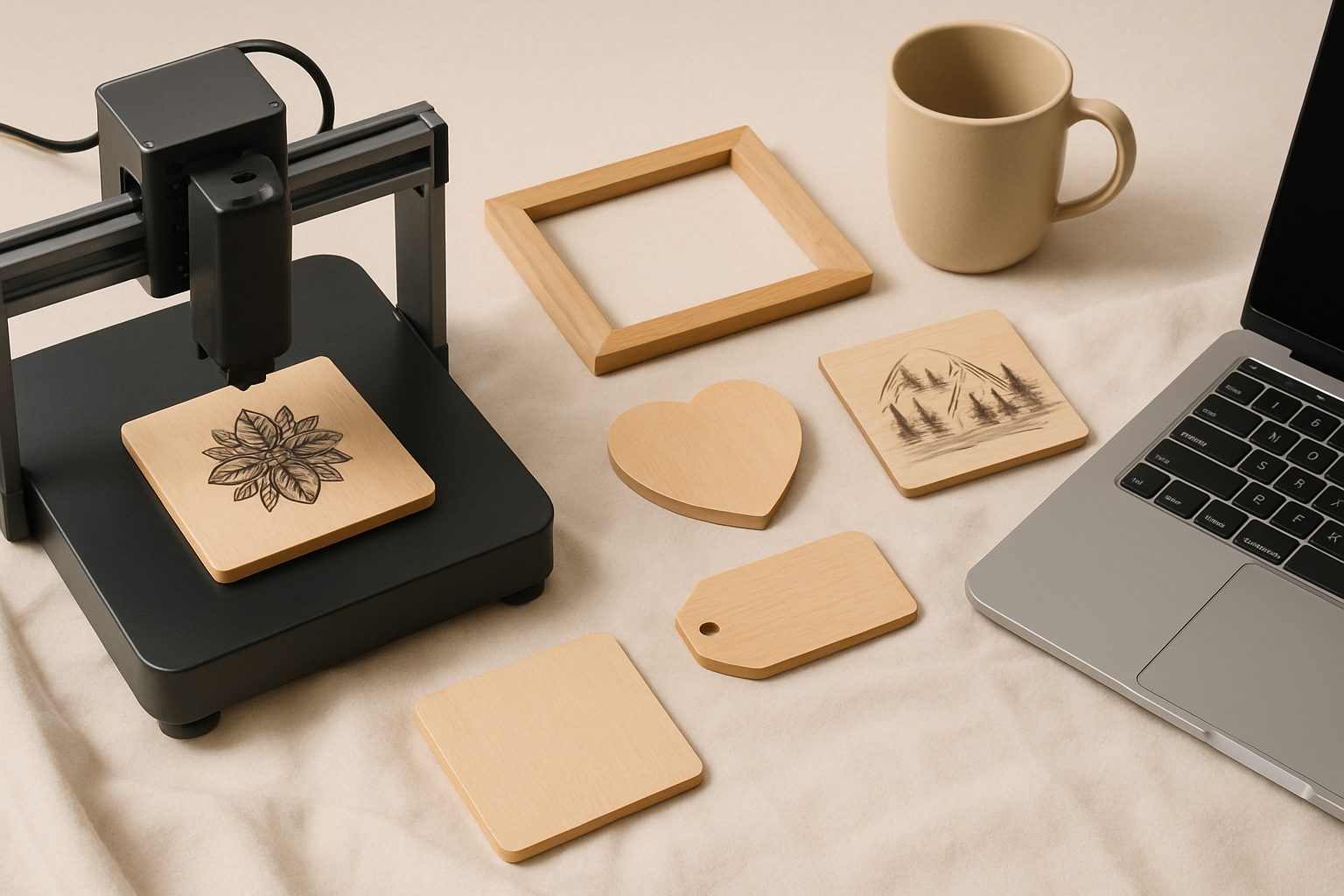
Diode Laser vs CO2 Laser Engraver UK: Which Type Should You Buy?
Choosing between a diode laser and a CO2 laser engraver is one of the first decisions you'll face when entering the hobby or small-business market. Both work, both have devoted users, but they're fundamentally different tools. The wrong choice wastes money; the right one saves it. Here's what actually matters.
The Core Difference
A diode laser uses solid-state semiconductor technology—essentially a focused beam of infrared light around 450 nanometres wavelength. A CO2 laser generates infrared light at 10,600 nanometres by running electrical current through a gas tube. That wavelength difference is everything. It determines what materials each machine can engrave, how efficiently it works, and what it costs to run.
Material Compatibility: The Real Constraint
This is where most buyers get it wrong. CO2 lasers engrave organic materials beautifully: wood, leather, paper, acrylic, and most plastics. They cut cleanly through plywood and hardwoods. Diode lasers struggle with all of these because they pass straight through without sufficient absorption.
Diode lasers excel at metal and dark surfaces. They mark anodised aluminium, stainless steel, titanium, and painted metal reliably. They work on dark acrylic, dark rubber, and stone. They cannot cut wood or acrylic effectively, and they won't engrave light-coloured or reflective materials well.
If your plan centres on wooden plaques, leather goods, or custom acrylic signs, a CO2 is mandatory. If you're marking metal tools, custom jewellery, or titanium watch cases, a diode is the only practical option.
Cost and Running Expenses
Diode lasers cost less upfront. A decent entry-level unit runs £300–£800. CO2 machines start around £1,000 and climb quickly; a capable mid-range model costs £2,500–£5,000. That's a significant barrier.
Running costs favour diodes. They use less electricity per job and the tube (typically solid-state, not consumable) lasts thousands of hours. CO2 tubes degrade over time and replacements cost £200–£600. They're consumables, not components.
However, CO2 machines are generally more efficient for certain materials: a single pass on wood or acrylic produces professional results quickly. A diode may require multiple passes or won't work at all.
Cutting vs Engraving
CO2 lasers cut through materials cleanly. A 40W CO2 will cut 3mm hardwood and up to 10mm acrylic. This opens entire product categories: wooden boxes, acrylic signage, decorative panels.
Diode lasers engrave only. They won't cut paper, wood, or thick materials. If you need finished cut products, a CO2 is essential.
Speed and Efficiency
CO2 lasers operate faster on compatible materials. A 40W CO2 engraves at higher speeds than a comparable diode, producing finished work in less time. This matters if you're processing multiple items per day.
Diodes are slower on metal but they're still viable for small-batch personalisation. They run cooler and draw less power, which matters in a home setup where ventilation and electrical capacity are constraints.
Space and Ventilation
Both types require extraction. CO2 tubes generate more heat and need active cooling in warmer months; many UK users add a separate chiller unit (£200–£400). Diodes run cooler and are easier to manage in a small workshop.
CO2 machines occupy more space because the tube runs horizontally and the entire gantry needs clearance. A 40W CO2 might need a 1.2m × 0.8m footprint. Compact diodes fit benchtops at 600mm × 400mm.
Safety and Maintenance
Both emit dangerous infrared light; both need adequate enclosures and never direct exposure. CO2 lasers require periodic mirror alignment (every few months), tube cleaning, and attention to cooling systems. They're more finicky.
Diode lasers are mechanically simpler. No mirrors to align, no cooling tubes to maintain. They're more forgiving for beginners.
Lifespan and Reliability
CO2 tubes degrade gradually; engraving depth decreases over 2–5 years depending on hours used. Budget for replacement.
Diode lasers last longer without performance loss—the semiconductor doesn't age the same way. Most will run reliably for 5–10 years with basic maintenance.
Which Should You Choose?
Choose a diode laser if: You're marking metal, personalising dark anodised goods, or testing the market with minimal investment. You have limited space and want zero maintenance. You're engraving dog tags, custom knives, or jewellery.
Choose a CO2 laser if: You're engraving wood, leather, or acrylic at volume. You need cutting capability for finished products. You're willing to invest more upfront and manage a slightly more complex machine. You plan to run a small business with recurring orders.
For absolute beginners, a diode offers lower financial risk and simpler operation. You'll learn the software, understand file preparation, and avoid expensive mistakes. Later, if you outgrow it, you'll know whether a CO2 is justified.
For established makers with a specific product in mind—wooden boxes, leather goods, engraved acrylic—a CO2 pays for itself quickly. The material range and cutting capability justify the cost.
The Honest Verdict
This isn't a case of one being "better." It's a case of matching the tool to your materials and output. Buy a diode for metal, speed, and simplicity. Buy a CO2 for wood, leather, and cutting. Many serious users eventually own both. Start with what matches your actual output, not the one that looks impressive.
More options
- xTool D1 Pro Diode Laser Engraver (Amazon UK)
- Sculpfun S30 Pro Laser Engraver (Amazon UK)
- Atomstack A20 Pro Laser Engraver (Amazon UK)
- Laser Engraver Safety Goggles (OD6+) (Amazon UK)
- Laser Engraver Air Purifier / Fume Extractor (Amazon UK)