What Can a Laser Engraver Cut & Engrave? Complete UK Materials Guide
Laser engravers open up a range of marking and cutting possibilities, but not all materials respond the same way. Understanding what your machine can handle—and what it absolutely can't—is crucial before you start a project. This guide covers the materials that work well with home laser systems in the UK, what to expect from each, and the safety considerations that matter.
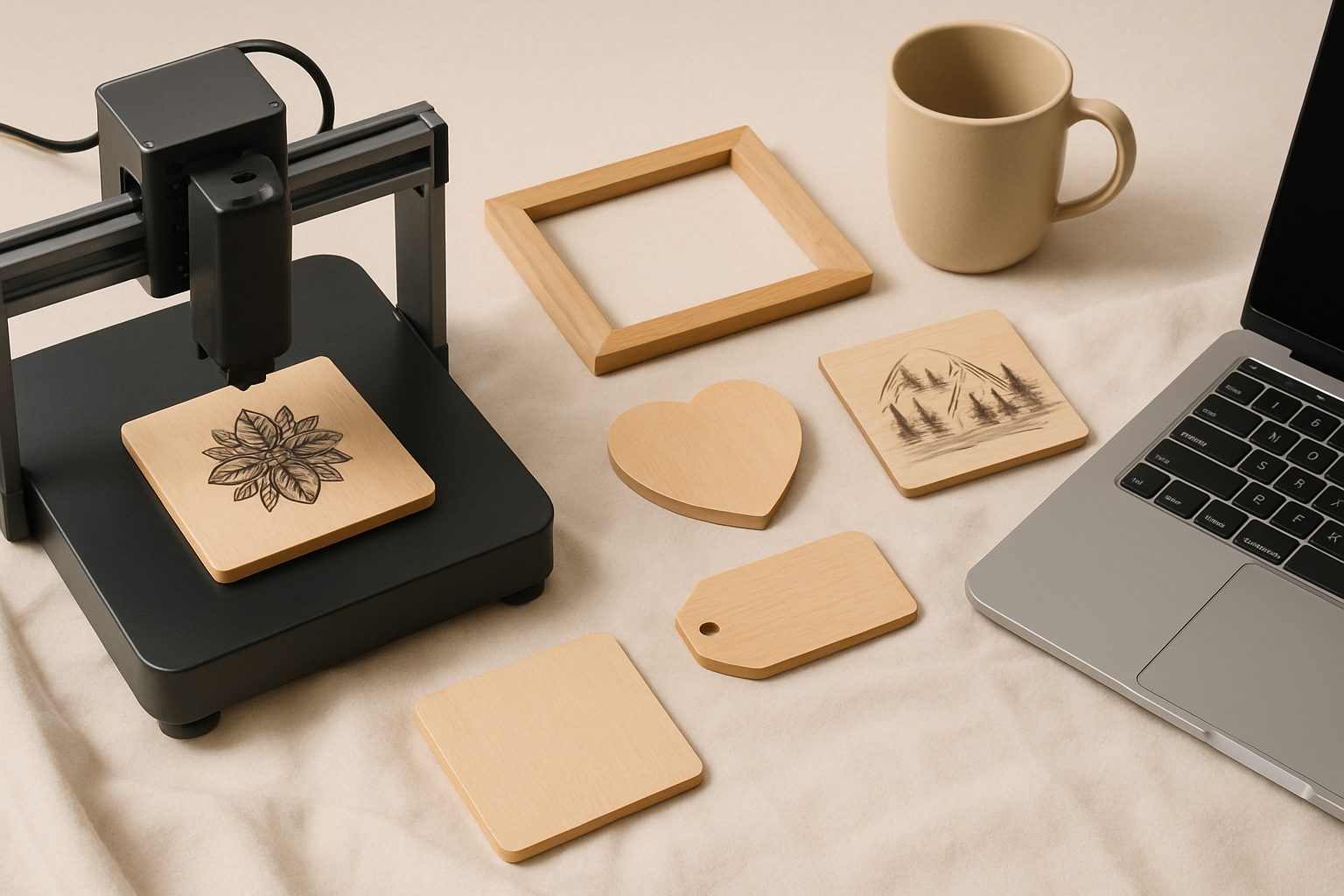
Wood and plywood
Wood is the most forgiving material for laser engravers. Hardwoods like oak and walnut produce crisp, dark engraved lines. Softwoods such as pine and birch work too, though they tend to scorch more readily and can look less refined. Plywood engraves cleanly on the veneer surface, though edge burn is common where the laser catches the glue between layers.
Engraving depth depends on your machine's power and the number of passes. A 40W CO₂ engraver will cut through 3mm plywood and engrave detailed images into hardwood. Thicker cuts (up to 8mm) are possible with multiple passes, though you'll see heat damage accumulate. Avoid MDF if you can—it releases formaldehyde when heated, and the dust is problematic for your machine's optics.
Acrylic
Cast acrylic is almost as forgiving as wood. It cuts cleanly with minimal charring, and engraved lines come out frosted white against the coloured background—a popular effect for signage and awards. Extruded acrylic (the cheaper alternative) can crack and melt unpredictably, so stick with cast.
Thick cast acrylic (6mm and above) requires more power or multiple passes. At 40W, you'll cut 5mm comfortably but struggle with 8mm unless you're willing to sacrifice speed. The main irritation is static—acrylic builds up charge during cutting, and dust clings to everything. A low-humidity workspace makes it worse.
Leather and suede
Genuine leather engraves beautifully, producing a darker burn line that contrasts sharply against the natural surface. Suede takes engraving well too, though it's softer and more delicate. Avoid synthetics and PU leather—they melt and smoke aggressively, clogging your optics and leaving a chemical stench.
Thickness matters. Vegetable-tanned leather up to 2–3mm is ideal. Thicker leather (4–5mm and above) requires multiple passes and careful power management to avoid excessive charring. Chrome-tanned leather is common and works fine, though it tends to brown more than vegetable-tanned stock.
Slate and stone
Slate engraves by scorching the surface to a pale grey or white mark. It's slower than other materials and demands precise focus, but the results are permanent and striking. This works best for personalised tiles, coasters, and gifts.
Fine-grained slate cuts more cleanly than rough varieties. Thick slate (10mm+) is possible but demands patience—a single pass might take several minutes. The main drawback is stone dust, which is silica-based and hazardous to inhale. Proper ventilation and extraction are non-negotiable.
Anodised aluminium
Anodised aluminium can be engraved by burning through the coloured oxide layer to expose the bare metal beneath. The contrast between the dark anodise and bright aluminium is sharp and professional. Unanodised aluminium doesn't work—the laser simply melts it without creating a clean mark.
Thickness up to 5mm is manageable on a 40W machine, though you'll need multiple slow passes. This is time-intensive compared to organic materials. The finish is durable and won't fade, making it ideal for labels and plaques.
Glass and mirror
Glass can be marked by producing tiny fractures in the surface, which scatter light and create a frosted effect. It requires extremely precise focus and a gentler power setting than you'd use on wood. Not all glass works equally—textured glass fractures predictably, but smooth soda-lime glass can be temperamental.
Tempered glass is off-limits—it shatters unpredictably when heated unevenly. Mirrored glass is technically possible but risky; the reflective coating can damage your laser tube. For most hobbyists, glass is a secondary material rather than a staple.
What not to engrave
Some materials are genuinely unsafe and will damage your machine or create dangerous fumes.
Never engrave PVC, vinyl, polyurethane, or any halogenated plastic. These release chlorine gas when heated, which corrodes your laser tube from the inside. Carbon-fibre composites contain resins that don't engrave cleanly and produce toxic smoke. Foam (EVA, polystyrene) melts and catches fire. Anything painted, coated, or varnished risks chemical fumes unless you're confident about the coating's heat tolerance.
Ventilation and extraction are critical, particularly when engraving stone, leather, or materials you're unfamiliar with. Inadequate extraction leads to dirty optics, reduced power, and potential health risks. If you're regularly working with materials that produce significant smoke or dust, investing in proper ventilation is essential.
Getting started
Start with wood and acrylic—they're the most predictable and forgiving. Test a small sample at low power first to understand how your specific machine and material interact. Each laser behaves slightly differently depending on age, alignment, and tube power. Build from there into leather and specialty materials once you're confident with your machine's capabilities and limitations.
More options
- xTool D1 Pro Diode Laser Engraver (Amazon UK)
- Sculpfun S30 Pro Laser Engraver (Amazon UK)
- Atomstack A20 Pro Laser Engraver (Amazon UK)
- Laser Engraver Safety Goggles (OD6+) (Amazon UK)
- Laser Engraver Air Purifier / Fume Extractor (Amazon UK)